
Legal
Credible Law Publishes Texas MCA Registration Guide Ahead of December 31, 2026 OCCC Deadline

New educational resource explains Texas registration, disclosure and automatic-debit rules affecting commercial sales-based financing.
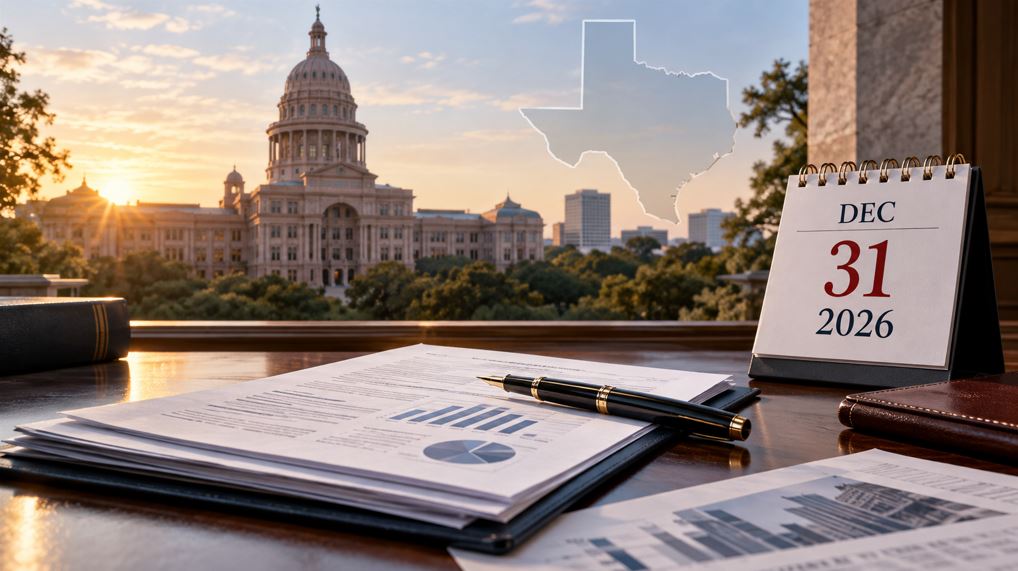
SAN DIEGO, Calif. / 500NewsWire / September 15, 2026 / Credible Law has published a new educational resource examining Texas requirements for commercial sales-based financing providers and brokers as the December 31, 2026 registration deadline approaches.
The new guide addresses the Texas regulatory framework established under House Bill 700 and Chapter 398 of the Texas Finance Code. It explains the upcoming registration deadline, the role of the Texas Office of Consumer Credit Commissioner, the application process through the Nationwide Multistate Licensing System and Registry, and several provisions that may affect merchant cash advance transactions involving Texas businesses.
The complete Texas OCCC MCA registration deadline guide is available through Credible Law.
Texas businesses increasingly use merchant cash advances and other sales-based financing products to obtain working capital. These transactions are commonly structured as purchases of future receivables rather than conventional loans. Payments may be collected through daily or weekly withdrawals from a business bank account and may be described as a percentage of future sales or receipts.
The expanding use of these products has prompted lawmakers in several states to adopt registration, disclosure and commercial-financing requirements. Texas is now implementing its own framework for certain providers and brokers operating within the state.
“Texas is creating a more defined regulatory structure for commercial sales-based financing,” said a Credible Law spokesperson. “Business owners, providers and brokers should understand that the new framework involves more than a single registration date. It also raises important questions concerning disclosures, payment mechanisms, contract provisions and the handling of future disputes.”
December 31 Registration Deadline Approaches
House Bill 700 was signed into law in 2025 and added Chapter 398 to the Texas Finance Code. The legislation created registration and disclosure requirements applicable to certain commercial sales-based financing transactions.
Under the adopted rules, providers and brokers already engaged in covered commercial sales-based financing activity must register with the Texas Office of Consumer Credit Commissioner by December 31, 2026. Businesses entering the Texas market should determine whether registration is required before conducting covered activity.
The OCCC began accepting Commercial Sales-Based Finance registration applications through NMLS on September 1, 2026. According to the agency, applicants that already have an NMLS account for the relevant entity may use that account, while other applicants must establish an account and complete the applicable company-registration process.
The OCCC also cautions that its staff cannot determine which registration or license an individual company must obtain. That determination depends on the applicant’s activities, the statutory definitions and any applicable exemptions.
Credible Law’s guide encourages affected organizations to examine their business models, transaction documents and relationships with Texas recipients rather than assuming that the terminology used in an agreement controls whether the law applies.
Who May Be Affected by the Texas Requirements
The Texas framework applies to covered providers and brokers of commercial sales-based financing, subject to the law’s definitions and exemptions.
Sales-based financing generally involves providing funds to a business in exchange for a right to receive a portion of that business’s future sales or revenue. The amount and timing of payments may be structured to increase or decrease according to the recipient’s sales volume.
In practice, however, merchant cash advance agreements vary considerably. Some contain reconciliation provisions, estimated repayment periods, fixed daily or weekly withdrawals, personal guaranties, security interests, UCC-related provisions and restrictions on obtaining additional financing.
Determining whether an organization qualifies as a provider, broker, exempt entity or technology service provider can require a fact-specific analysis. Companies should review the substance of their transactions and their role in arranging or providing financing.
The new Credible Law resource is intended to help readers identify the major issues that may warrant further review. It is not a substitute for an individualized legal or regulatory analysis.
Disclosure Rules Create New Compliance Considerations
In addition to registration, Chapter 398 establishes disclosure requirements for certain covered commercial financing transactions.
Depending on the transaction, required disclosures may address the amount of financing, disbursement amounts, finance charges, total repayment amounts, payment methods, payment frequency, prepayment policies and other material terms.
Clear disclosures may become particularly significant when disputes arise over how an agreement was presented to the recipient. A business owner may focus primarily on the funded amount and the scheduled withdrawal without fully understanding the total purchased amount, the effective cost of capital or the circumstances under which payments may be adjusted.
Texas does not simply convert every merchant cash advance into a traditional loan. Nevertheless, the legislation creates additional standards governing how covered sales-based financing is offered and documented.
The legal characterization of an individual transaction may still depend on the complete agreement and the parties’ actual conduct. Relevant considerations may include whether payments are meaningfully contingent on future receipts, whether reconciliation is available in practice, whether the transaction has a finite term and whether the provider assumes a genuine risk that receivables may not be generated.
Automatic Bank Debits Receive Additional Attention
Automatic withdrawals are among the most consequential features of many merchant cash advance agreements.
A business may authorize daily or weekly ACH debits from its operating account as the method for delivering purchased receivables. When revenue declines but the withdrawal remains unchanged, the payments can consume a growing percentage of the company’s available cash.
Texas law addresses automatic debits in covered commercial sales-based financing transactions. The statutory language restricts a provider or broker from establishing a mechanism that automatically debits a recipient’s deposit account unless the applicable requirements are satisfied, including requirements involving a validly perfected, first-priority security interest.
The application of this provision can depend on the transaction, the parties and the status of competing claims. Businesses should not assume that the new law automatically authorizes them to block payments, close accounts or disregard existing contractual obligations.
Likewise, providers should not assume that previously used debit practices will necessarily satisfy the new Texas requirements.
Credible Law recommends that parties seek qualified legal advice before making unilateral changes to payment arrangements or bank-account access.
Contract Provisions and Enforcement Disputes
The Texas framework also addresses particular contract provisions and prohibited practices. Among other provisions, the legislation restricts confessions of judgment and similar devices in covered agreements.
These requirements may become important in collection actions and other enforcement proceedings. Disputes involving merchant cash advances frequently concern contract classification, default provisions, reconciliation requests, ACH withdrawals, personal guaranties, venue provisions, security interests and representations made during the funding process.
The existence of a registration or disclosure violation does not necessarily determine the outcome of every dispute. Available arguments and remedies depend on the governing law, transaction documents, procedural posture and specific facts.
Business owners responding to a demand, account freeze, collection action or merchant cash advance lawsuit should preserve their agreements, payment histories, bank statements, reconciliation communications, notices and court papers.
Deadlines in litigation and arbitration can be short. Ignoring legal documents can result in default judgments, enforcement activity or the loss of defenses that might otherwise have been available.
Why the Texas Changes Matter to Business Owners
Although much of the registration obligation falls on providers and brokers, the evolving regulatory environment also matters to recipients of commercial financing.
Texas business owners may benefit from understanding:
- Whether a transaction falls within the definition of commercial sales-based financing
- What disclosures should accompany a covered offer
- How payment frequency and repayment amounts are presented
- Whether a reconciliation procedure is available and meaningful
- What authorization supports automatic withdrawals
- Whether particular contract provisions are restricted
- How the provider or broker is identified
- What documents should be preserved if a dispute develops
Business owners should review the complete economics of an offer before accepting funding. The deposited amount alone does not reveal the total cost or the strain that daily or weekly payments may place on cash flow.
Companies with multiple advances should also calculate their combined payment burden. Individually manageable withdrawals can become unsustainable when several obligations are stacked against the same revenue stream.
A Developing Area of Commercial Finance Law
The Texas requirements are part of a broader state-by-state movement toward regulating commercial financing disclosures and sales-based financing activity.
Because the rules differ among jurisdictions, organizations operating nationally may face overlapping registration, disclosure and documentation requirements. A transaction that is treated one way in Texas may be subject to different requirements in California, New York, Florida, Virginia, Connecticut or another jurisdiction.
Credible Law will continue monitoring developments involving merchant cash advance laws, commercial financing disclosures, registration requirements and MCA enforcement disputes.
The new Texas guide is intended for business owners, financial professionals, attorneys, brokers, providers and members of the media seeking a concise explanation of the approaching deadline and its broader significance.
About Credible Law
Credible Law is a national legal resource and attorney-referral network that provides educational information and connects businesses and consumers with qualified attorneys based on practice area and jurisdiction. Its merchant cash advance resources address MCA agreements, lawsuits, defaults, settlements, bank-account restraints, UCC liens, arbitration proceedings and related business disputes.
Credible Law’s educational materials do not constitute legal advice and do not create an attorney-client relationship. Legal outcomes depend on the specific agreement, jurisdiction, procedural history and facts of each matter.
Media Contact
Credible Law
160 Thorn Street
San Diego, CA 92103
Phone: (888) 201-0441
Email: contact@crediblelaw.com
Website: CredibleLaw.com
Disclaimer: This release is provided for general educational and informational purposes only. It does not provide legal, financial, tax or regulatory advice. Businesses and individuals should consult qualified counsel regarding their particular circumstances.